

Seven Amazing Jimmie Johnson Chase stats
by Tom Jensen October 22, 2026
When it comes to NASCAR’s 10-race, season-ending Chase, no one came close to matching Jimmie Johnson’s numbers.

Clutch athletes shine brightest when championships are on the line, and no one did it better in the NASCAR post-season than seven-time Cup Series champion Jimmie Johnson, a member of the NASCAR Hall of Fame Class of 2024.
All seven of Johnson’s NASCAR titles came after NASCAR first adopted its post-season format in 2004, when it was called the Chase for the Nextel Cup. Although NASCAR would make multiple changes to its championship format from 2004 on, there was one constant: Winning a Cup title meant excelling in the final 10 races of the season. And that’s where Johnson consistently performed at the highest level.
In honor of Johnson’s seven NASCAR Cup championships, here are seven amazing statistics from Johnson’s performances in the Chase, which was later renamed the NASCAR playoffs before becoming the Chase again in 2026.

Most wins
When winning mattered most, Johnson was at his best. From 2004-2016, Johnson won 29 Chase races, which represents about 35 percent of his 83 career Cup victories. No other driver has won as many as 20 post-season races. Second-place Kevin Harvick (Class of 2027) has 16 victories, little more than half of Johnson’s total. All told, Johnson won 22.3 percent of 130 Chase races he competed in from 2004-2016.

Tracks
There wasn’t just one track where Johnson excelled; he was good most everywhere. In fact, Johnson’s 29 Chase race victories were spread across a NASCAR record 10 different tracks from Florida to Southern California: Atlanta Motor Speedway, Auto Club Speedway, Charlotte Motor Speedway, Darlington Raceway, Dover Motor Speedway, Homestead-Miami Speedway, Kansas Speedway, Martinsville Speedway, Phoenix Raceway and Texas Motor Speedway.

Best tracks
While Johnson won post-season races at 10 different tracks, there were a handful of places where he truly dominated. He won six Chase races at the 0.526-mile Martinsville short track, five at the fast 1.5-mile Texas track and four each at Charlotte, another 1.5-mile track, and the 1-mile high-banked Dover oval.

Three Generations
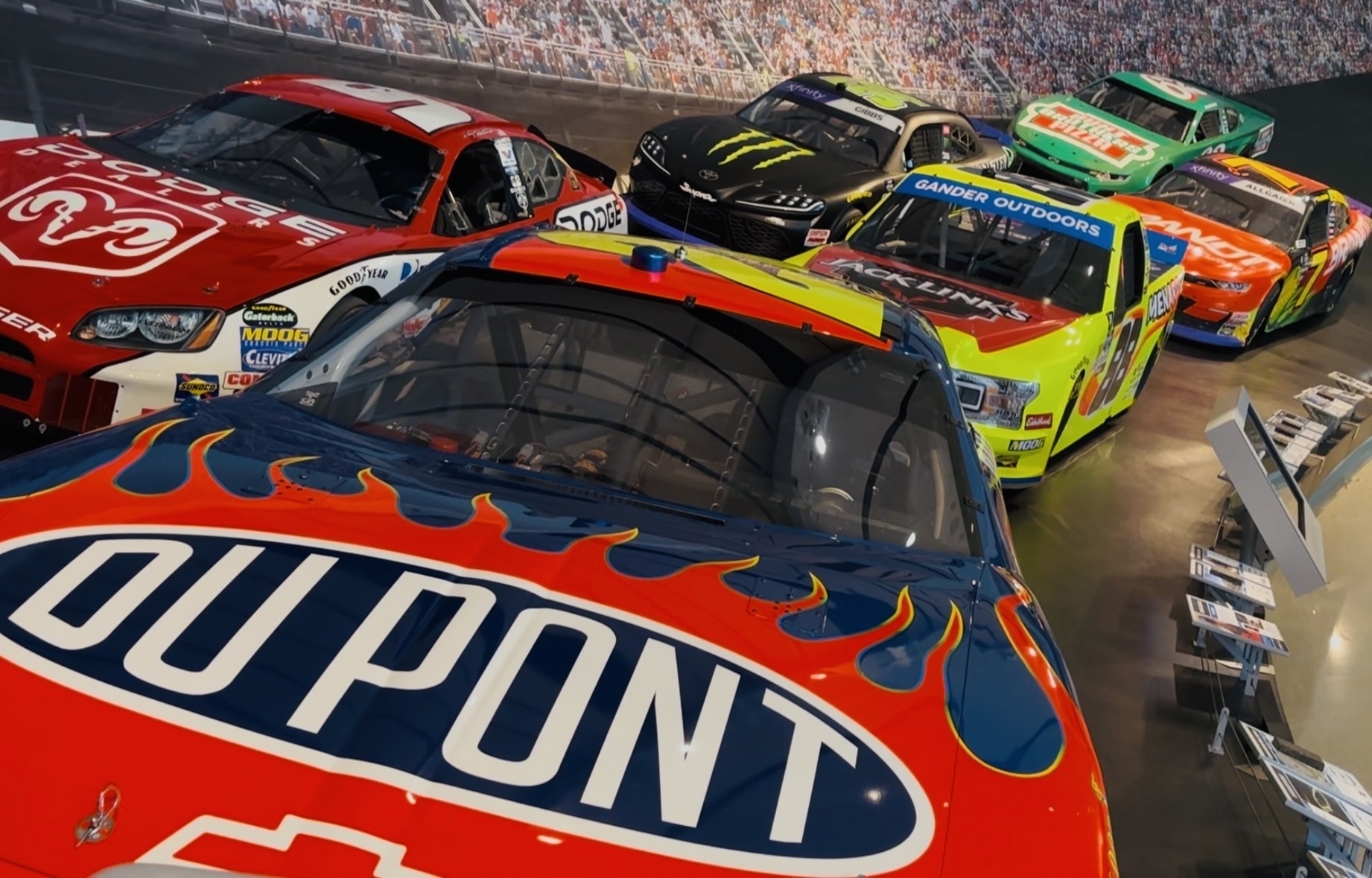
All of Johnson’s Chase victories came in No. 48 Hendrick Motorsports Chevrolets owned by Rick Hendrick (Class of 2017) and prepared by crew chief Chad Knaus (Class of 2024). But they were in three different generations of NASCAR race cars, starting with the Generation 4 cars known as the “Twisted Sisters” for their asymmetrical bodywork. Those were used through part of the 2007 season, when NASCAR introduced the Generation 5 cars called at the time “The Car of Tomorrow.” In 2013, NASCAR adopted the Generation 6 cars. Johnson won races and championships in all three generations of cars.

Wins in different formats
When Johnson won his first championship in 2006, the Chase field was 10 drivers. When he won his next five titles, from 2007-2010 and 13, the Chase field was 12 drivers. In 2014, NASCAR expanded the field to 16 drivers, changed the name from Chase to playoffs and introduced a format where the top four drivers in points would compete in a shootout in the final race of the season. The top finisher in the last race would be crowned champion. In 2016, Johnson won the title in the playoff format. It was his seventh and final championship.

Streaks
In 2007, Johnson became the only driver in history to win four consecutive Chase races. Trailing his Hendrick Motorsports teammate Jeff Gordon (Class of 2019) halfway through the Chase, Johnson won at Martinsville Speedway, Atlanta Motor Speedway, Texas Motor Speedway and Phoenix Raceway. The Texas victory gave Johnson a points lead he would not surrender as he took his second of his record-tying seven Cup championships.

Streaks, Part II
Consistency was a key part of Johnson’s success in the Chase. In a 13-year span from 2004-2016, the Southern California racer won at least one Chase race every year and in eight of those seasons he won multiple races. Johnson also qualified for the Chase for the first 15 years. His consecutive years with at least one Chase win is a NASCAR record.