






Looking Back At The First Chase
by Tom Jensen September 02, 2026
Twenty-two years ago, NASCAR debuted its new Chase format. What followed in the final 10 races of the season was unforgettable.
After a 12-year hiatus, NASCAR has brought back its season-ending, 10-race title battle known as the Chase, which will determine the 2026 Cup Series champion.
The top 16 drivers in NASCAR’s 26-race regular season qualified for the Chase, which kicks off September 6 with the running of the Southern 500 at historic Darlington Raceway. The driver with the most points at the conclusion of the 10th Chase race will be the series champion.
Originally known as the Chase for the Nextel Cup, the format was first used in 2004. The original Chase was very similar to the 2026 edition, the biggest difference being that in 2004, only 10 drivers made the Chase compared with 16 this time around.
Seven of the original 10 Chase drivers went on to become NASCAR Hall of Fame inductees: Mark Martin (Class of 2017), Matt Kenseth (Class of 2023) and Kurt Busch (Class of 2026) from Roush Racing (now RFK Racing); Jeff Gordon (Class of 2019) and Jimmie Johnson (Class of 2024) from Hendrick Motorsports; Tony Stewart (Class of 2020) from Joe Gibbs Racing; and Dale Earnhardt Jr. (Class of 2021) from Dale Earnhardt Inc. All seven of the team owners represented in the first Chase were later inducted into the NASCAR Hall of Fame.
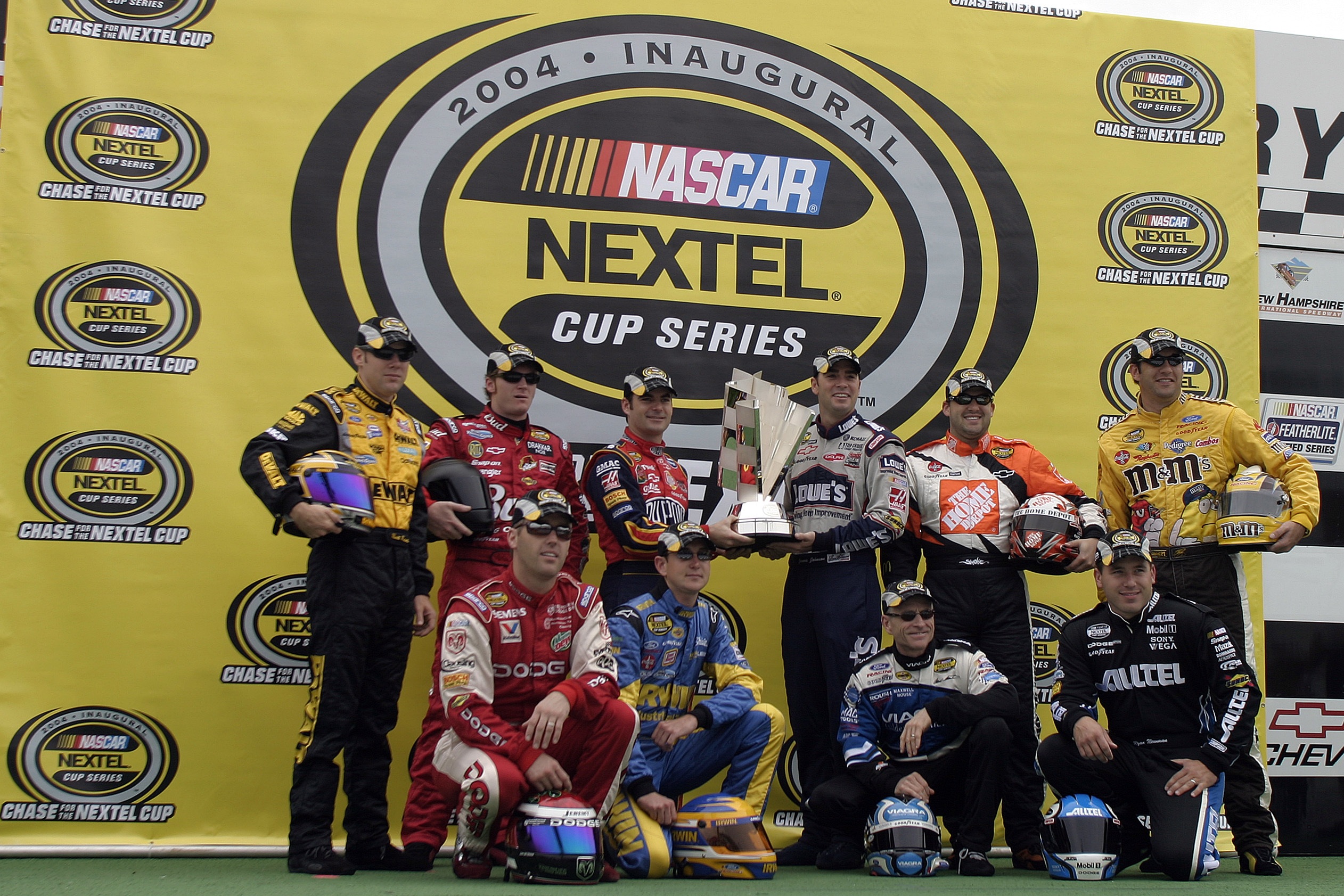
Ten drivers from seven teams participated in the first NASCAR Chase in 2004. Photo courtesy of Gavin Lawrence/Getty Images
The first Chase race was the 2004 Sylvania 300 at New Hampshire International Speedway (now New Hampshire Motor Speedway). In addition to the seven Hall of Famers who qualified for the Chase, nine additional Hall of Famers competed in the event: Rusty Wallace (Class of 2013); Dale Jarrett (Class of 2014); Terry Labonte (Class of 2016); Bobby Labonte (Class of 2020); Ricky Rudd (Class of 2025); Carl Edwards (Class of 2025); Kevin Harvick (Class of 2027); and Jeff Burton (Class of 2027).
Also driving in that race was Kirk Shelmerdine (Class of 2023), who was making a rare start as a Cup driver. Shelmerdine was best known for winning four Cup championships as a crew chief for Dale Earnhardt (Class of 2010).
The story of the first Chase was a tale of triumph and tragedy.
Roush Racing’s Kurt Busch scored an upset victory in the Chase opener at New Hampshire, and over the first half of the Chase established himself as the driver to beat.
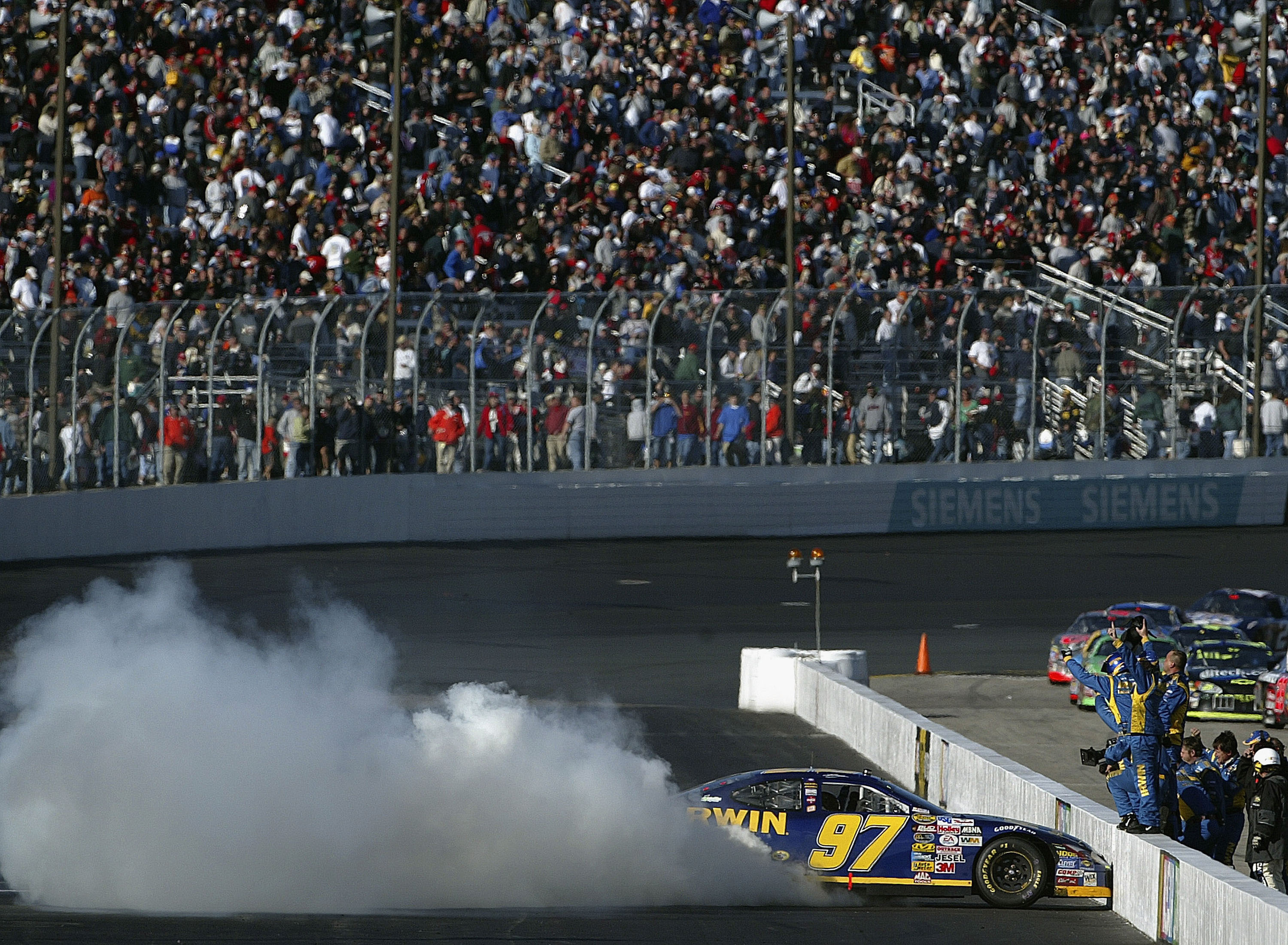
A victory in the first Chase race put Kurt Busch in a solid position to make a run for the 2004 NASCAR Nextel Cup Series championship. Photo courtesy of Gavin Lawrence/Getty Images
After the fourth Chase race at Kansas Speedway, Busch led the Chase by 29 points over Dale Earnhardt Jr., with Johnson languishing in ninth place, 247 points behind the leader.
Johnson narrowed the gap slightly the following week, winning at Charlotte Motor Speedway, but only gaining 20 points because Busch finished fourth in the race.
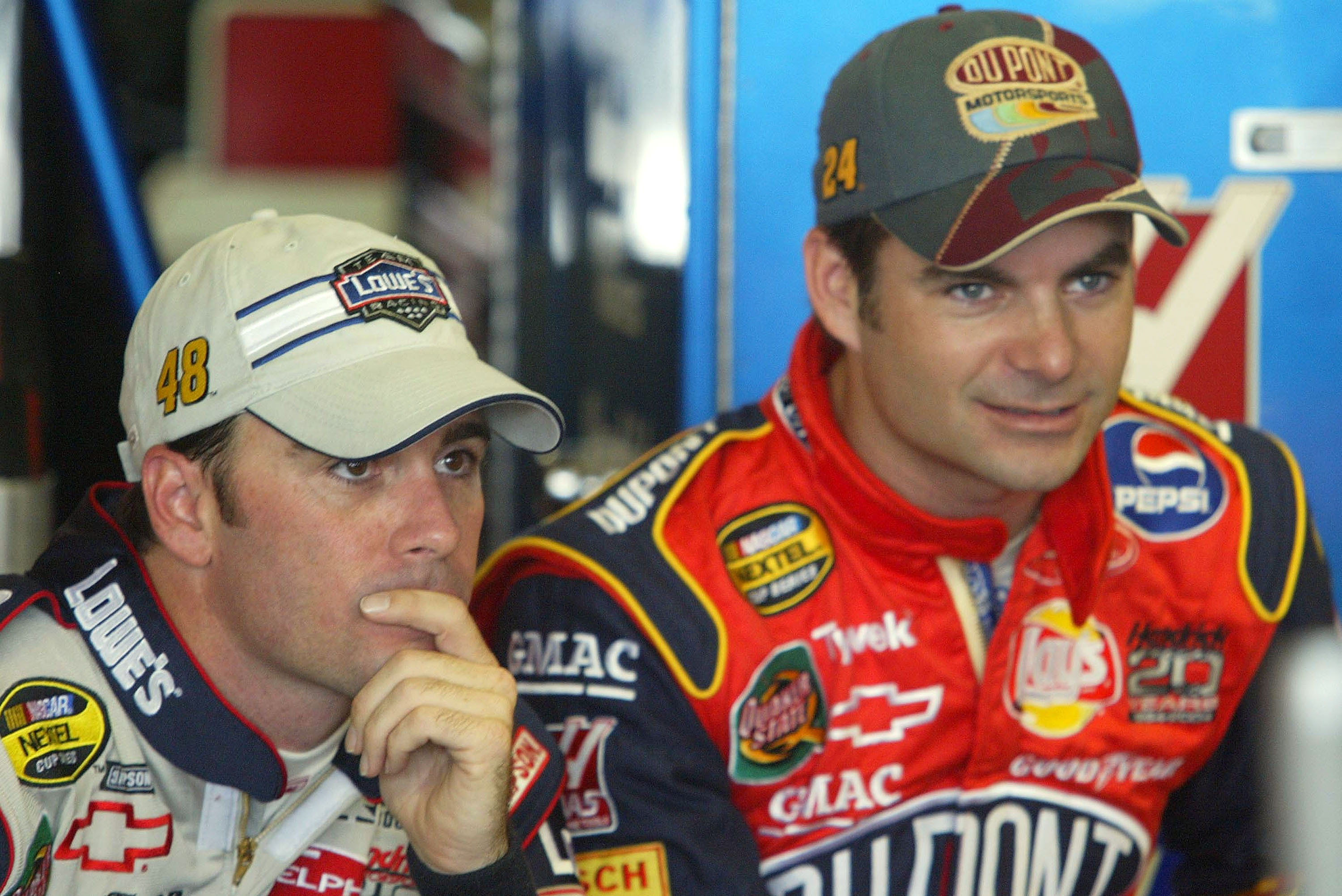
Hendrick Motorsports teammate Jimmie Johnson (left) and Jeff Gordon came into NASCAR’s first Chase in 2004 as two of the championship favorites. Photo courtesy of Todd Warshaw/Getty Images
The next week at Martinsville Speedway, everything changed.
On the morning of October 24, a Hendrick Motorsports airplane headed to Martinsville crashed in dense fog, killing all 10 people aboard including Ricky Hendrick, the son of team owner Rick Hendrick (Class of 2017), as well as Rick’s brother John and John’s two daughters.
Later that day, Johnson won the Martinsville race, unaware of the incident until after he took the checkered flag.
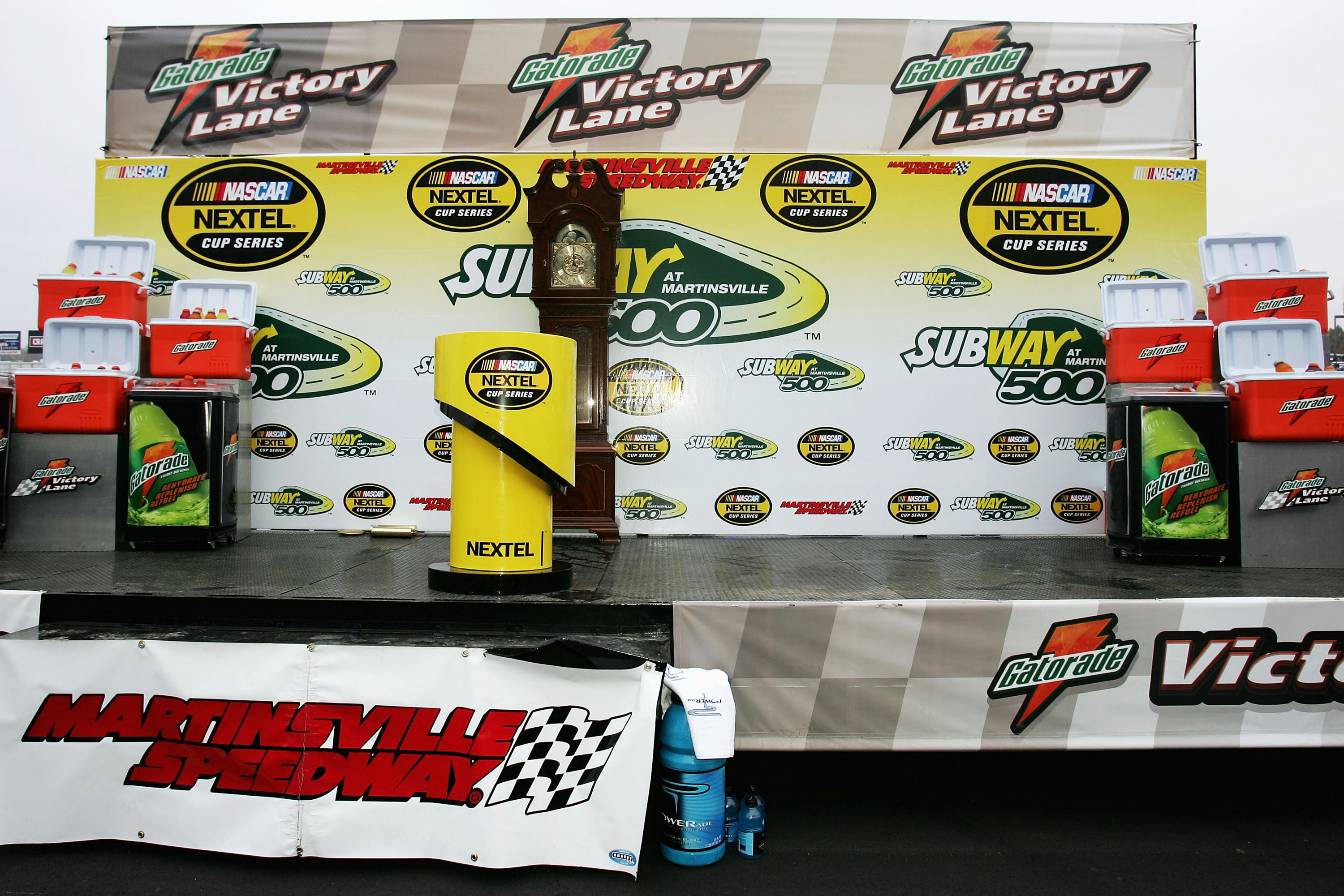
The Victory Lane celebration for Jimmie Johnson at Martinsville Speedway was cancelled due to a Hendrick Motorsports airplane crash earlier in the day. Photo courtesy of Jonathan Ferrey/Getty Images
Despite the devastating tragedy, the Hendrick team raced the following weekend at Atlanta Motor Speedway, where Johnson scored a hugely emotional victory as he won his third consecutive race. With three races to go in the season, Busch’s 247-point lead after Kansas had been cut to just 59, as Johnson moved from ninth place in the standings all the way up to second.
Race No. 8 of the Chase took place at Phoenix and was won by Earnhardt Jr., as Busch held onto his narrow points lead. The championship got even tighter the following week, when Johnson won at Darlington Raceway, earning his fourth victory in the last five races.
Thought to be out of contention before the halfway point of the Chase, Johnson was suddenly in position to possibly capture his first NASCAR championship.
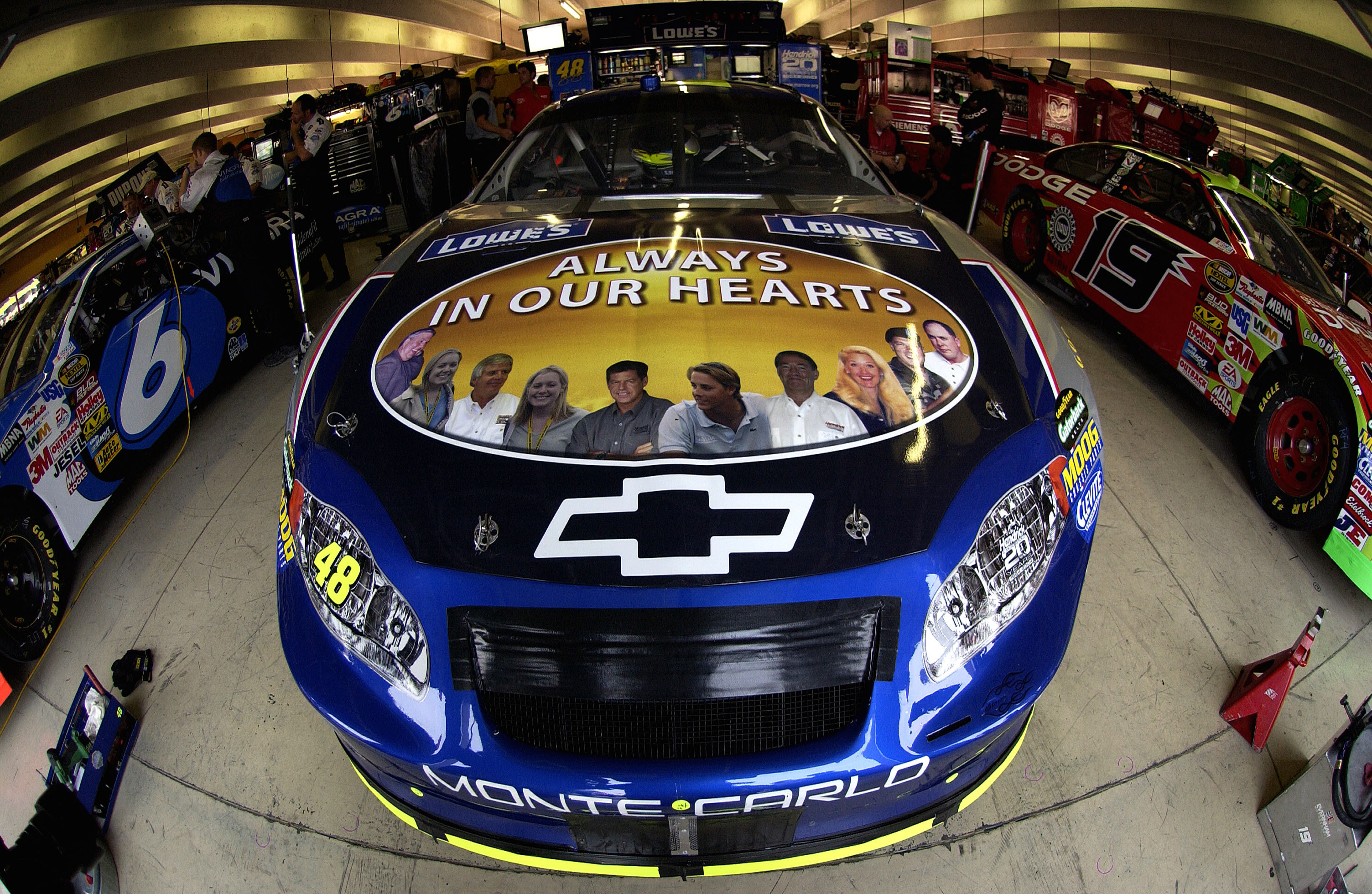
One week after the Martinsville tragedy, all the Hendrick Motorsports cars at Atlanta Motor Speedway carried large decals honoring the lives of the 10 family members and friends lost in the crash. Photo courtesy of Rusty Jarrett/Getty Images
Heading into the season-ending Ford 400 at Homestead-Miami Speedway, Busch led Johnson by just 18 points and Johnson’s teammate Jeff Gordon by 21 points.
The championship race was a wild and unpredictable affair, with a moment of high drama that remains one of the most memorable in recent NASCAR history.
Busch qualified on the pole with his Roush Racing Ford, but early in the race, calamity struck. On Lap 93, Busch radioed crew chief Jimmy Fennig that he was coming to the pits because he had a loose wheel.
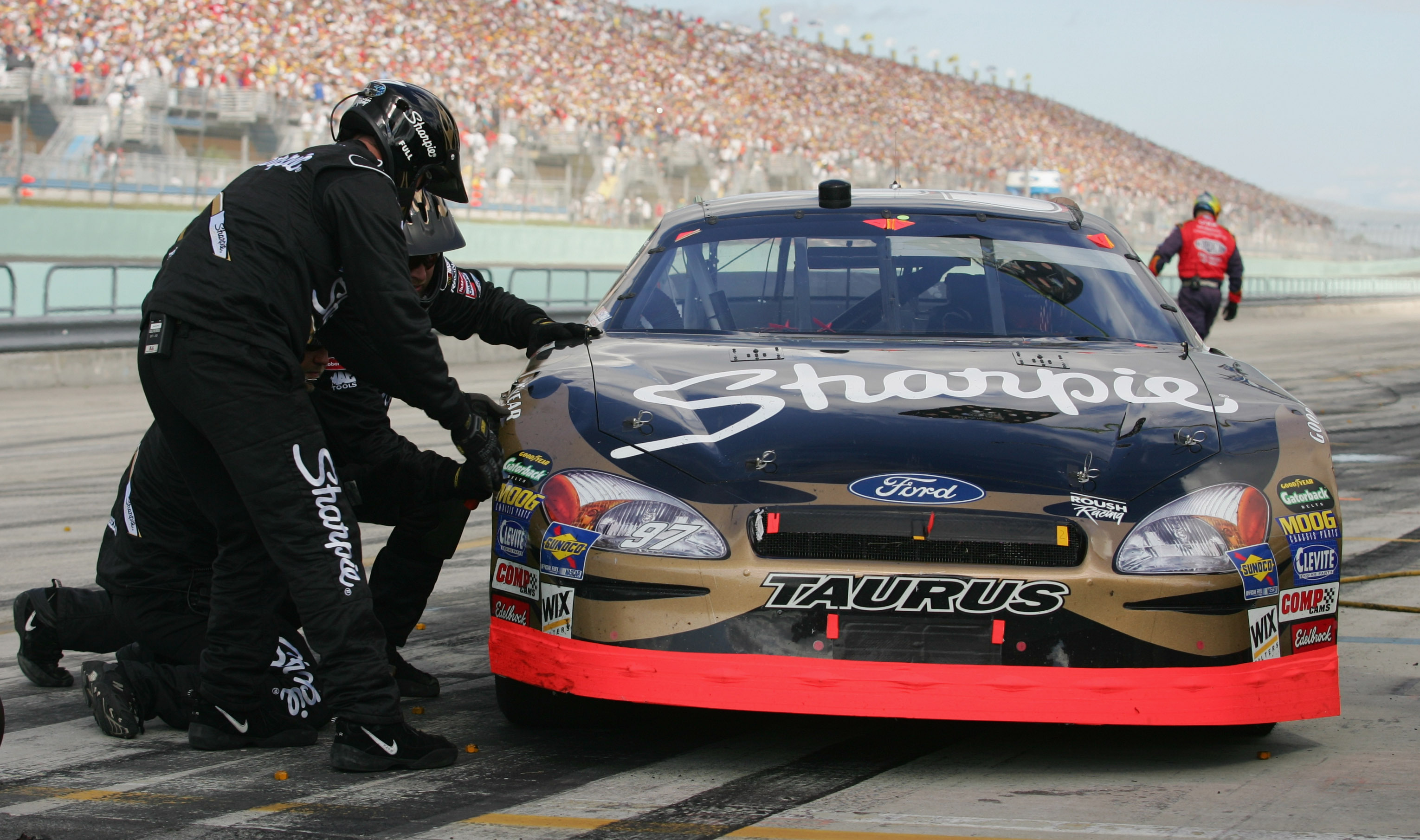
The Roush Racing crew rushed to make repairs after Kurt Busch lost a right-front wheel during the season-ending 2004 Ford 400 at Homestead-Miami Speedway. Photo courtesy of Robert Laberge/Getty Images
As Busch headed to pit road, his right-front wheel came off the car entirely and rolled onto the racetrack, bringing out a caution. Driving on three tires, Busch missed striking the pit wall by just inches and safely made it to his pit stall. The caution flag that flew for Busch’s errant tire allowed him to stay on the lead lap and in contention for a solid finish.
As the race wound down, Busch’s Roush Racing teammate Greg Biffle took the lead with 2 laps to go and took the checkered flag 0.342 seconds ahead of Johnson, with Gordon third. Busch held on to finish fifth and win his only Cup Series title and the second in a row for team owner Jack Roush (Class of 2019). Busch’s final margin was just 8 points over Johnson and 16 over Gordon.
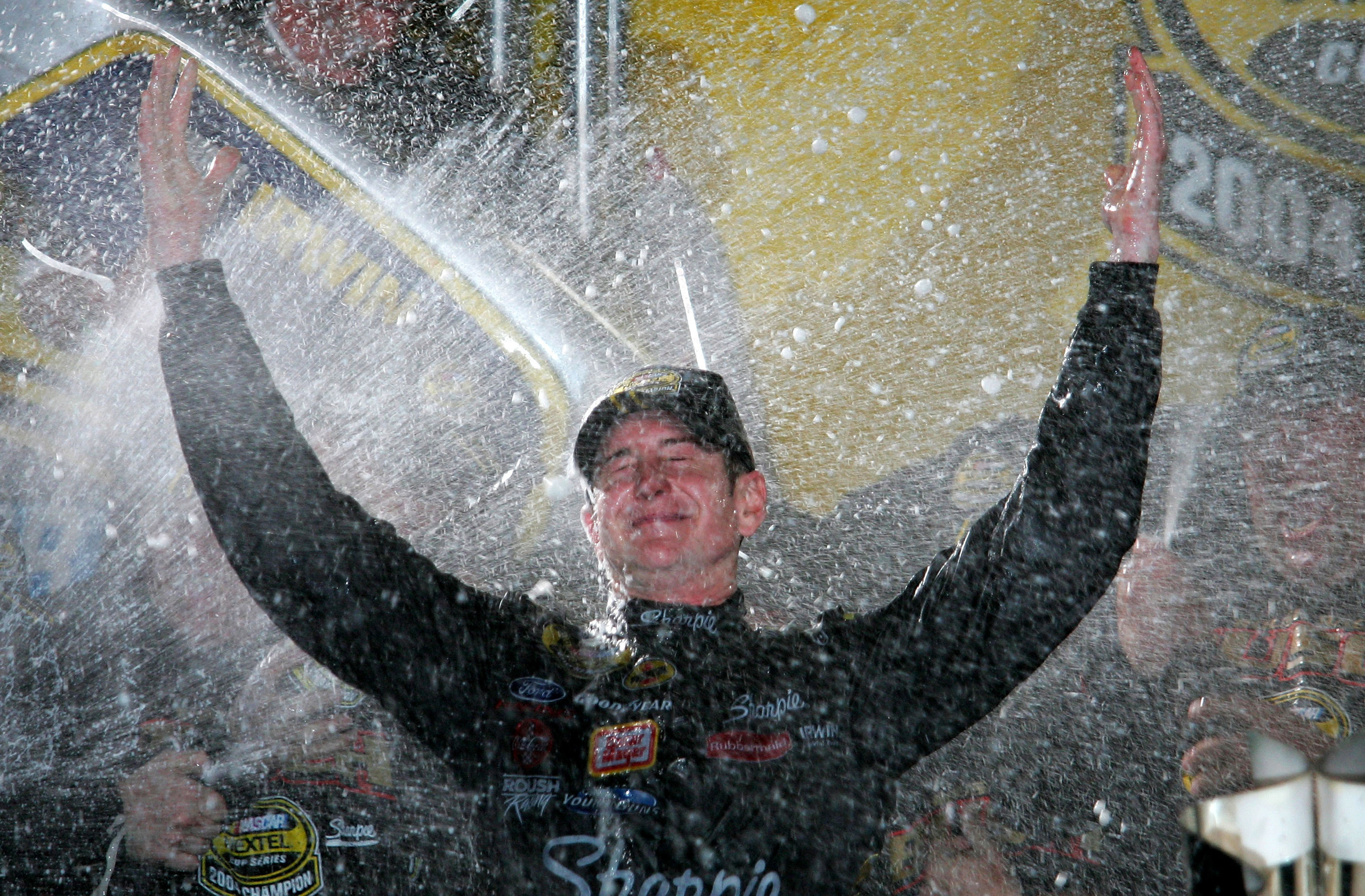
In 2004, Kurt Busch made history by winning NASCAR’s first championship in the Chase format. Photo courtesy of Robert Laberge/Getty Images
The first Chase remains one of the most incredible championship battles in history and one that will live forever in NASCAR lore. Busch came into the first Chase as the No. 7 seed, and to this day he remains the lowest seed to win a title in the Cup Chase or playoff format.
Kurt Busch’s exhibit in the NASCAR Hall of Fame’s Hall of Honor includes his Roush Racing 2004 Ford Taurus, which was his backup car for the Homestead race, as well as his NASCAR Nextel Cup championship trophy.
Plan your visit to the NASCAR Hall of Fame and purchase tickets by visiting nascarhall.com/tickets.

 Historic Moments
Crown Jewel Victories: One-And-Done Winners
August 14, 2026 Historic Moments
The First Brickyard 400 Was A Transformational Race
July 24, 2026 Hall of Famers
Kurt Busch Bet Big On Himself With MJ
July 08, 2026 Historic Moments